
Future of AI Tools 2026-2030: Predictions and Trends
The AI tools of today are just the beginning. Based on current trajectories and emerging research, here’s where AI is heading in the next five years.

The Current State (2026)
Before looking forward, let’s acknowledge where we are:
Where AI Tools Excel Today
1. Text tasks: Writing, editing, summarization
2. Code assistance: Generation, debugging, explanation
3. Research: Synthesis, analysis, discovery
4. Creative: Images, video, audio generation
5. Automation: Workflows, scheduling, data entry
Where AI Tools Still Struggle
1. Complex reasoning: Multi-step planning
2. Real-world execution: Physical tasks
3. Long-term memory: Persistent context
4. True creativity: Genuine innovation
5. Reliability: Hallucination, errors
2026-2027: The Agent Revolution
What’s Coming
1. Autonomous Agents
AI agents that complete multi-step tasks:
- Book travel and manage itinerary
- Handle email correspondence
- Execute complex research projects
- Manage projects end-to-end
2. Tool Proliferation
AI that uses hundreds of tools:
- Specialized agents for every task
- Agents that call other agents
- Real-time web interaction
- Physical world interfaces
3. Personal AI Assistants
AI that truly knows you:
- Your preferences, habits, goals
- Your work context and history
- Your relationships and commitments
- Your creative style and voice
My Prediction
By end of 2027:
- **50% of knowledge work** will involve AI agents
- **AI agents** will handle routine administrative work
- **Personal AI** will be common for professionals
- **Agent marketplaces** will emerge
2028-2029: Multimodal Mastery
What’s Coming
1. True Multimodal AI
AI that seamlessly operates across:
- Text, images, video, audio
- Documents, presentations, spreadsheets
- Code interfaces, command lines
- Physical interfaces
2. Spatial AI
AI that understands space:
- 3D environment awareness
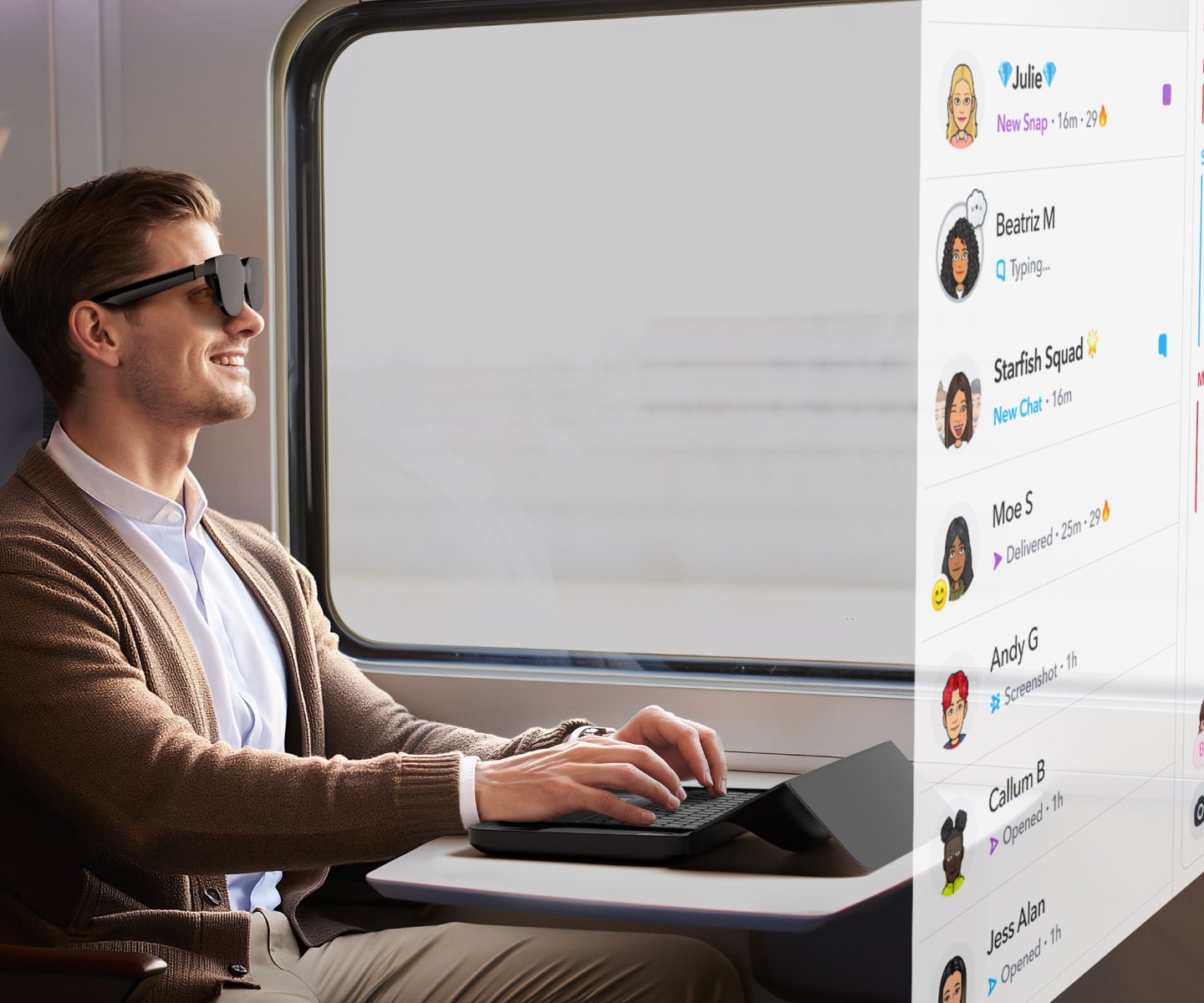
- AR integration
- Physical task assistance
- Spatial reasoning
3. Emotional AI
AI with emotional intelligence:
- Recognize emotional context
- Respond appropriately
- Support mental health
- Enhance communication
My Prediction
By end of 2029:
- **Multimodal AI** will be standard
- **Spatial computing** will integrate with AI
- **Emotional awareness** will improve human-AI collaboration
- **Physical AI assistants** will begin emerging
2030: The Transformation
What Work Looks Like
Knowledge Work
- AI handles 80% of routine knowledge tasks
- Humans focus on strategy, creativity, relationships
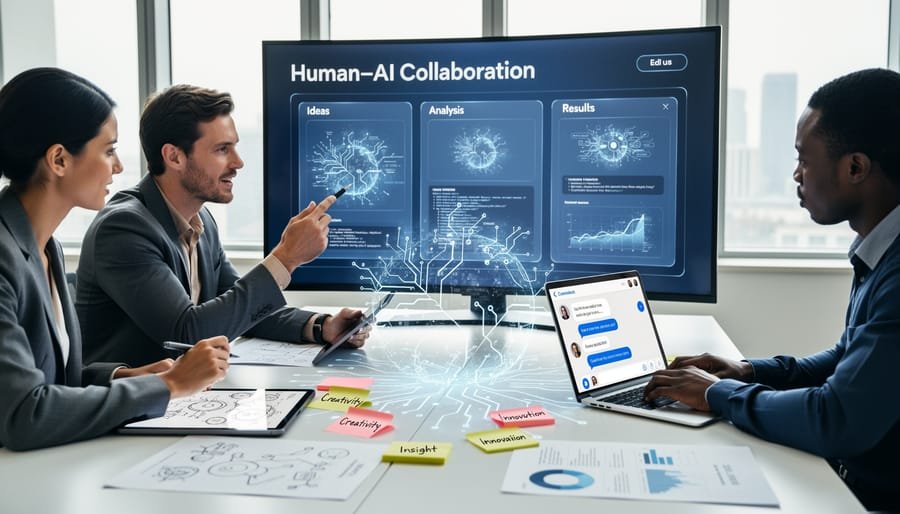
- New categories of jobs emerge around AI collaboration
- Productivity increases 10x+ for knowledge workers
Creative Work
- AI as creative partner, not replacement
- Human curation and judgment more valuable
- New art forms emerge from AI-human collaboration
- Creative tools become accessible to everyone
Physical Work
- AI-guided robotics becomes common
- Human-AI teams in manufacturing, healthcare
- AI that understands physical world context
- Automation of dangerous and repetitive tasks
What Life Looks Like
Daily Life
- Personal AI manages logistics, communication
- Smart environments anticipate needs
- Health and wellness AI becomes standard
- Learning is continuous and personalized
Society
- Economic structures adapt to AI abundance
- New social contracts emerge
- Education transforms fundamentally
- Inequality dynamics shift
Key Trends to Watch
Trend 1: AI Agent Ecosystems
What: Specialized agents that work together
Example:
- Research agent finds information
- Analysis agent processes data
- Writing agent creates content
- Editing agent polishes output
- Publishing agent distributes content
Timeline: 2026-2027
Trend 2: Personal AI Models
What: AI trained on your personal data
Example:
- Your writing style, preferences, voice
- Your projects, contacts, context
- Your goals, habits, patterns
- Your creative aesthetic
Timeline: 2027-2028
Trend 3: AI Infrastructure
What: Foundation for AI operations
Components:
- Agent orchestration platforms
- AI memory and persistence
- Agent-to-agent protocols
- AI governance systems
Timeline: 2026-2028
Trend 4: Physical AI
What: AI that operates in physical world
Applications:
- Home robots
- Healthcare assistants
- Manufacturing partners
- Construction aids
Timeline: 2028-2030
Trend 5: AI Regulation and Rights
What: Legal and ethical frameworks
Considerations:
- AI accountability
- Data privacy
- Employment impact
- AI rights (for advanced AI?)
Timeline: 2026-2030 (ongoing)
What This Means for You
If You’re a Knowledge Worker
Now (2026):
- Learn AI collaboration
- Build AI workflows
- Stay current with tools
2027-2028:
- Adopt AI agents
- Personalize your AI
- Focus on uniquely human skills
2029-2030:
- Lead AI-human teams
- Leverage AI for leverage
- Develop strategic thinking
If You’re a Business Leader
Now (2026):
- Identify AI opportunities
- Build AI strategy
- Start small pilots
2027-2028:
- Scale AI adoption
- Reskill workforce
- Reimagine operations
2029-2030:
- Transform business model
- Lead industry change
- Create new value
If You’re Building AI Tools
Now (2026):
- Agent infrastructure
- Tool integrations
- User experience
2027-2028:
- Agent marketplaces
- Personal AI platforms
- Multimodal experiences
2029-2030:
- Physical AI
- New interface paradigms
- AGI-adjacent tools
The Human Role
What Stays Human
Despite AI advancement:
1. Purpose and meaning: Why we do things
2. Relationships: Human connection
3. Creativity: Novel innovation
4. Judgment: Complex decisions
5. Ethics: Right and wrong
6. Leadership: Inspiring others
7. Love and care: Human relationships
The New Human Skills
Skills that matter more:
1. AI collaboration: Working effectively with AI
2. Critical evaluation: Judging AI outputs
3. Prompt engineering: Effective communication
4. Systems thinking: Understanding complexity
5. Adaptability: Embracing change
6. Continuous learning: Never stop learning
My Honest Assessment
Optimistic Scenario
AI tools become powerful assistants that:
- Free humans for meaningful work
- Solve major problems
- Expand human capability
- Create new opportunities
Concerning Scenario
AI tools create challenges:
- Job displacement
- Concentration of power
- Loss of skills
- Social disruption
Realistic Scenario
We get both:
- Tremendous opportunity
- Significant disruption
- Need for adaptation
- New social contracts
Preparing for the Future
This Year (2026)
1. Learn AI tools: Build competency now
2. Experiment widely: Try new AI applications
3. Build habits: Integrate AI into daily work
4. Stay informed: Follow developments
Next 2 Years (2027-2028)
1. Adopt agents: Move to autonomous workflows
2. Personalize: Create your AI setup
3. Upskill: Focus on human-unique skills
4. Connect: Build AI-savvy networks
Next 5 Years (2026-2030)
1. Lead change: Help others adapt
2. Create new: Leverage AI for new ventures
3. Shape policy: Participate in AI governance
4. Remain human: Don’t lose what makes us human
Final Thoughts
The future of AI tools isn’t about replacement—it’s about transformation. The tools we build today shape the world we live in tomorrow.
My advice: Start using AI tools now. Build the skills for collaboration with AI. Stay curious and adaptable.
The future belongs to those who learn to work effectively with AI while maintaining what makes us uniquely human.
*What AI trends are you most excited or concerned about?*
Related Articles
- [AI agents guide](https://aipilotdaily.com/ai-agents-complete-guide-2026) – agents are key trend
- [AI productivity tools](https://aipilotdaily.com/ai-tools-for-productivity-2026) – productivity focus
- [GPT-5](https://aipilotdaily.com/openai-gpt-5-enterprise-2026) – future AI model



Leave a Reply