Helium 10 Guides / Comparisons
TOOL-STACK DECISION · CHECKED SEPTEMBER 24, 2026
Helium 10 vs Keepa: Which Amazon Seller Tool Do You Actually Need?
Helium 10 and Keepa overlap around Amazon product research, but they answer different questions. Keepa is strongest when the decision depends on price, Best Sellers Rank, offers and history. Helium 10 is broader when the job moves into product discovery, keyword research, listing work, advertising and ongoing brand operations.
The important distinction: history versus workflow
Keepa’s official API documentation centers on complete price histories, detailed product records, marketplace offers, deals, bestseller lists, seller information and tracking notifications. Its Product Finder can query a product database using structured criteria. That makes Keepa especially useful when the risk is hidden in what happened over time: a temporary price spike, unstable Buy Box, changing seller count or a seasonal BSR pattern.
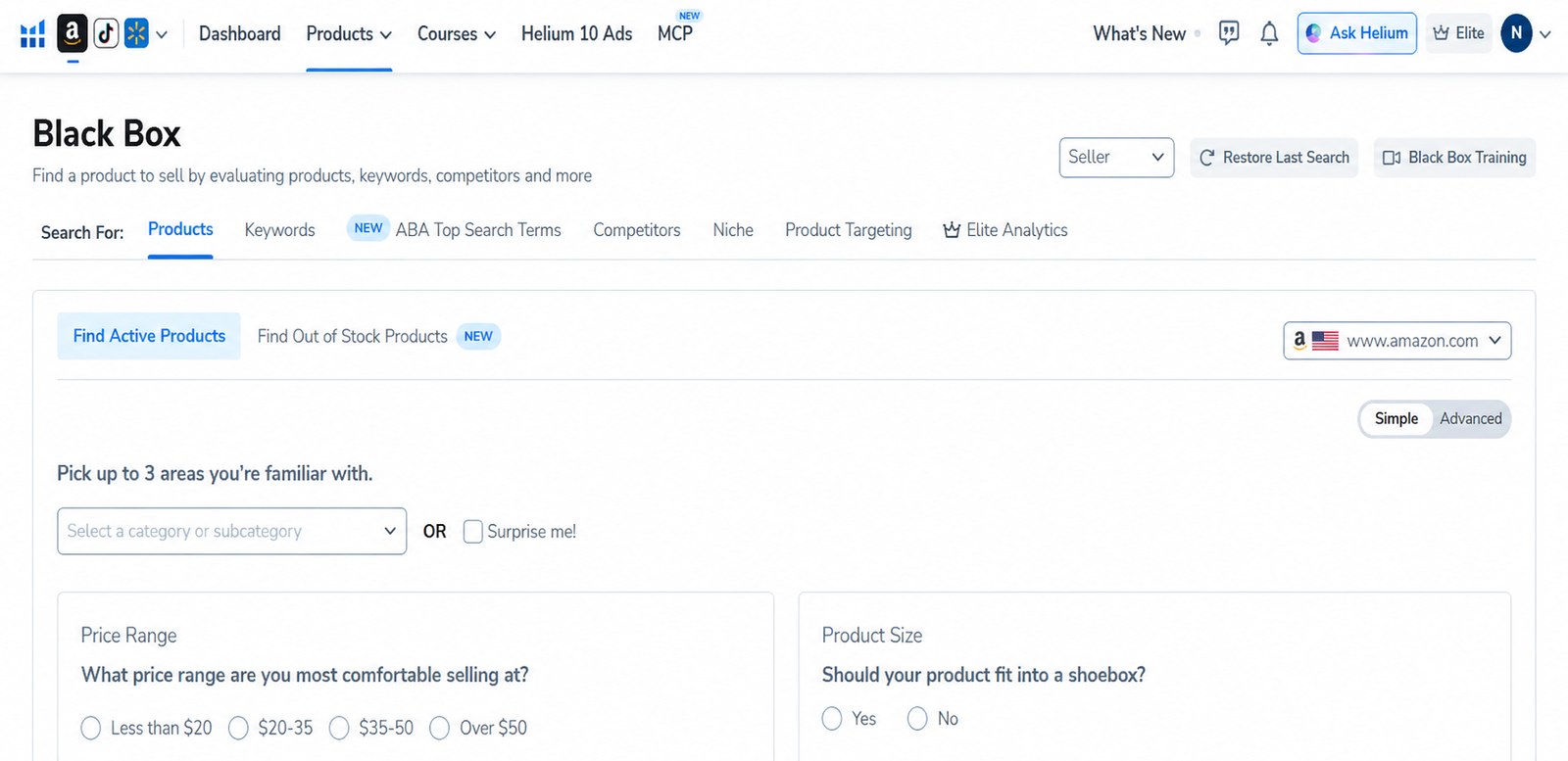
Helium 10 covers a wider Amazon seller workflow. Black Box starts with product criteria; Xray screens a live marketplace page; Cerebro reverse-engineers competitor keyword visibility; Magnet expands seed keywords. Other tools extend into listing optimization, tracking, advertising and operations. Breadth is the advantage—but also the reason beginners can pay for features they do not yet need.
Helium 10 vs Keepa at a glance
| Decision | Better starting tool | Why |
|---|---|---|
| Was this price or rank spike temporary? | Keepa | Historical price and BSR context is the core job. |
| Which keywords drive a competitor’s visibility? | Helium 10 | Cerebro is designed around reverse-ASIN keyword research. |
| Find private-label product candidates | Helium 10 | Black Box and Xray connect discovery to deeper validation. |
| Evaluate a wholesale supplier list | Keepa | Price, offer and rank history usually matter before listing optimization. |
| Monitor price drops and offers | Keepa | Tracking and alerting are first-class Keepa functions. |
| Build and optimize an Amazon listing | Helium 10 | Keyword and listing workflows continue after product selection. |
| Understand both historical stability and keyword demand | Both | The evidence is complementary rather than duplicated. |
Where Keepa is stronger
Historical price and rank context
A current Amazon page can look healthy because of a recent promotion, stockout or temporary price move. Keepa is designed to put that snapshot into a longer history. The useful question is not merely “what is the BSR now?” but “does this pattern persist, repeat seasonally or reverse when the price changes?”
Offer and seller investigation
Keepa’s official offer object includes seller, condition, Prime/FBA flags, coupons, price and shipping histories, with important freshness caveats. Its own documentation warns that retrieving every marketplace offer is not feasible and that some offers can be outdated. That limitation is exactly why a careful workflow checks timestamps rather than treating a row as live inventory truth.
Tracking and alerts
Keepa supports product tracking and notifications when selected price conditions are met. This is a natural fit for sourcing models where the decision changes with price, seller count or availability.
Where Helium 10 is stronger
Keyword intelligence
Keepa can help explain how an ASIN behaved. It does not replace the question “which search terms are associated with this competitor?” Helium 10’s Cerebro and Magnet workflows are built around that problem. For private-label sellers, keyword relevance affects product positioning, listing structure and launch planning.
Connected product-discovery workflow
Black Box can produce a filtered candidate set, Xray can test a live results page and Cerebro can investigate selected competitors. That handoff is useful when the seller is moving from “what could I sell?” to “how would buyers discover it?”
Broader operating suite
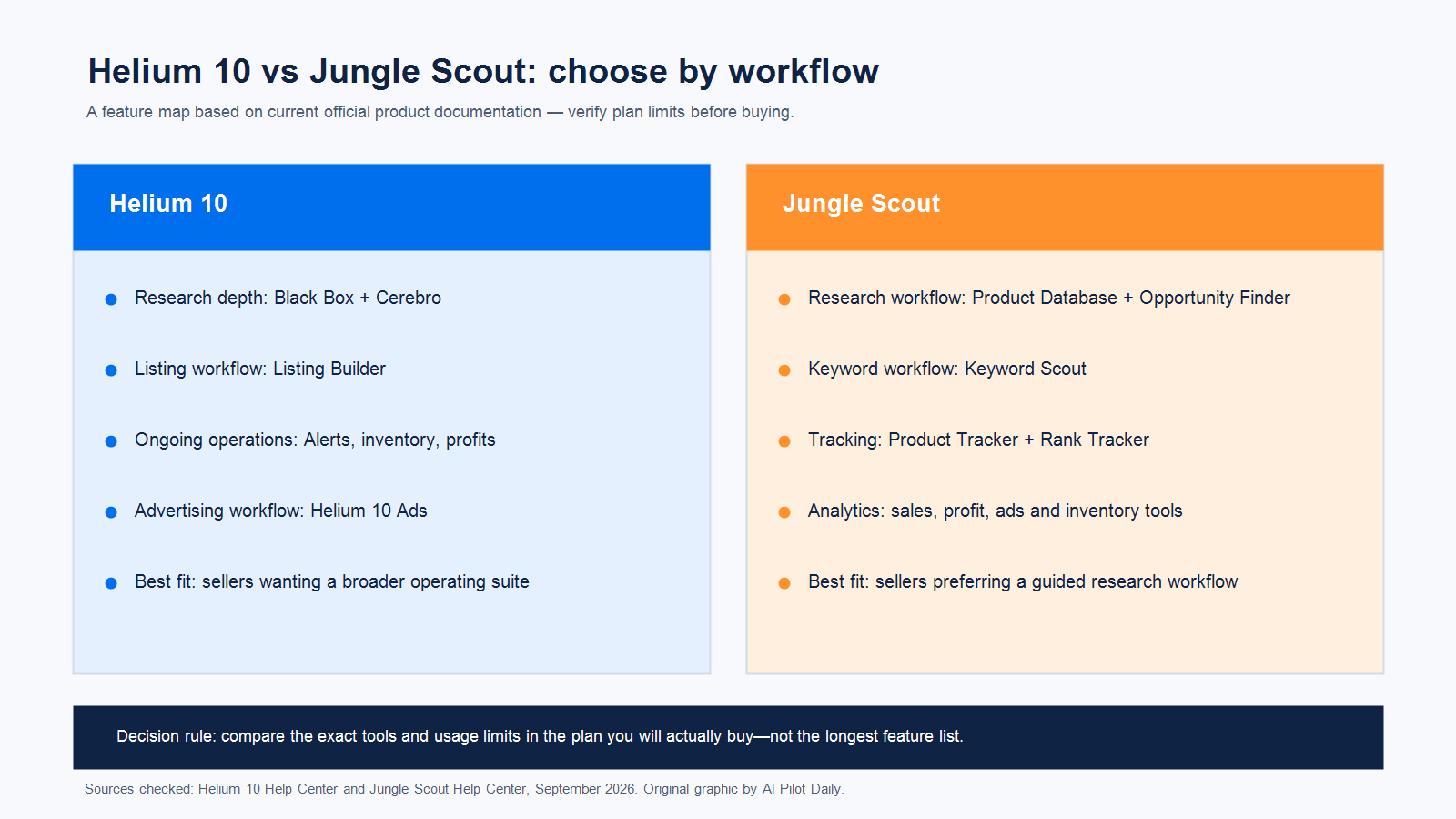
Helium 10 extends past research into listing, tracking, advertising and other seller operations. The suite makes sense when several of those jobs happen every week. It is expensive shelfware when the user opens only one feature occasionally.
Which tool fits your seller model?
Private label
Helium 10 is usually the better first paid suite because product discovery, keyword research and listing work are recurring. Add Keepa when price and rank history materially changes sourcing or competitor decisions. Do not use a short-term revenue estimate without historical context.
Wholesale
Keepa is usually the better first tool. You are often evaluating existing ASINs, price stability, offers, Buy Box behavior and rank history rather than inventing demand for a new listing. Helium 10 becomes relevant when keyword visibility, listing opportunity or broader brand research enters the workflow.
Online or retail arbitrage
Keepa normally comes first because the opportunity depends on the relationship between acquisition cost, Amazon price history, fees, competition and sell-through evidence. A broad listing-optimization suite is rarely the first bottleneck.
KDP and private-label content products
Helium 10 can be more useful for niche and keyword exploration, while Keepa can provide historical context on comparable ASINs. Neither tool proves that a book or product concept will convert; relevance, offer quality and differentiation still require judgment.
Agencies and larger brands
Both can make sense when different teams need historical ASIN evidence, keyword tracking, listing operations and advertising workflows. The decision should be based on repeated client deliverables, not on having the largest software stack.
A no-waste buying sequence
- Name the decision: price stability, product discovery, keyword demand, listing work or alerts.
- Use the cheapest valid evidence first: Amazon’s own Product Opportunity Explorer or Brand Analytics may answer part of the question.
- Choose one specialist: Keepa for history or Helium 10 for the broader research-to-listing workflow.
- Document the weekly repeat: record how often the tool changes a real decision.
- Add the second tool only when the evidence gap repeats: one interesting chart is not a subscription case.
What neither tool can prove
- Your true landed cost, return rate and blended PPC profitability.
- Supplier reliability, compliance or intellectual-property safety.
- That estimated sales will continue after a launch or promotion ends.
- That a keyword is relevant enough to convert for your exact offer.
- That historical correlation explains why price, rank or demand changed.
AFFILIATE DISCLOSURE
Considering Helium 10?
AI Pilot Daily may earn a commission if you purchase Helium 10 through our links, at no extra cost to you. We have paid-account access for Helium 10 interface research. This comparison uses Keepa’s official public documentation and does not claim a paid hands-on Keepa test.
Start with the Helium 10 Free Plan guide
Verify live features, limits, billing terms and checkout totals before subscribing.
Frequently asked questions
Does Helium 10 replace Keepa?
No. Helium 10 is broader for product, keyword, listing and operations workflows; Keepa specializes in price, rank, offer history and tracking.
Is Keepa enough for wholesale?
It is often the better first research tool, but it does not replace cost accounting, supplier checks, restriction checks or operational judgment.
Do private-label sellers need both?
Not at the beginning. Start with the tool that answers the immediate decision, then add the second only when the missing evidence becomes a recurring problem.
Which tool is better for keyword research?
Helium 10 is the clearer choice because Cerebro and Magnet are designed for reverse-ASIN and seed-keyword workflows.
Which tool is better for price history?
Keepa. Historical Amazon price and rank tracking is central to its product.
Sources and editorial method
Keepa capabilities are based on its official API overview, plan/token documentation, offer-object documentation and tracking documentation. Helium 10 capabilities are based on current official Black Box, Xray and supported-market documentation plus our documented paid-account interface access. Community discussions were used to identify seller-model questions, not as proof of performance or pricing.
Official sources: Keepa API overview · Keepa plans and tokens · Keepa offer data · Helium 10 Black Box · Xray to Cerebro workflow.