PAID-ACCOUNT KEYWORD ANALYSIS
Cerebro IQ Score compares estimated search demand with the number of competing products. It can help sort a large reverse-ASIN export, but a high score does not prove relevance, conversion potential, attainable rank or profit.

What is the Cerebro IQ Score?
Helium 10 describes Cerebro IQ Score as a ratio between estimated search volume and the number of competing products for a keyword. In plain language, the metric tries to surface phrases with relatively more estimated demand and relatively fewer competing results.
The score is useful for sorting, not for declaring a keyword “easy.” Both inputs are estimates or marketplace counts, and neither tells you whether your exact product deserves to rank for the phrase.
Why a high IQ Score can still be a bad keyword
| Failure mode | What the score misses | Required check |
|---|---|---|
| Wrong intent | A phrase can have attractive demand but describe a different product, audience or use case. | Read the query literally and inspect the live Amazon results. |
| Concentrated competition | A low product count does not reveal whether a few dominant listings own most clicks and sales. | Review top listings, review depth, brand strength and rank distribution. |
| Seasonality | A current volume estimate can hide a short event-driven spike. | Check search-volume history and record the research date. |
| Poor economics | Keyword demand says nothing about landed cost, fees, returns or ad cost. | Run a contribution-margin model before launch. |
| Variation noise | Parent-child listings can blur which variation earns the observed demand. | Inspect the exact ASIN and relevant variations. |
Our paid-account case: 10,355 keywords is not a brief
In a paid Helium 10 account, we ran a reverse-ASIN search for a women’s open-back workout top. The result set contained 10,355 total phrases: 10,005 organic, 210 sponsored and 629 Amazon-recommended signals. These categories can overlap, so they should not be summed as mutually exclusive buckets.
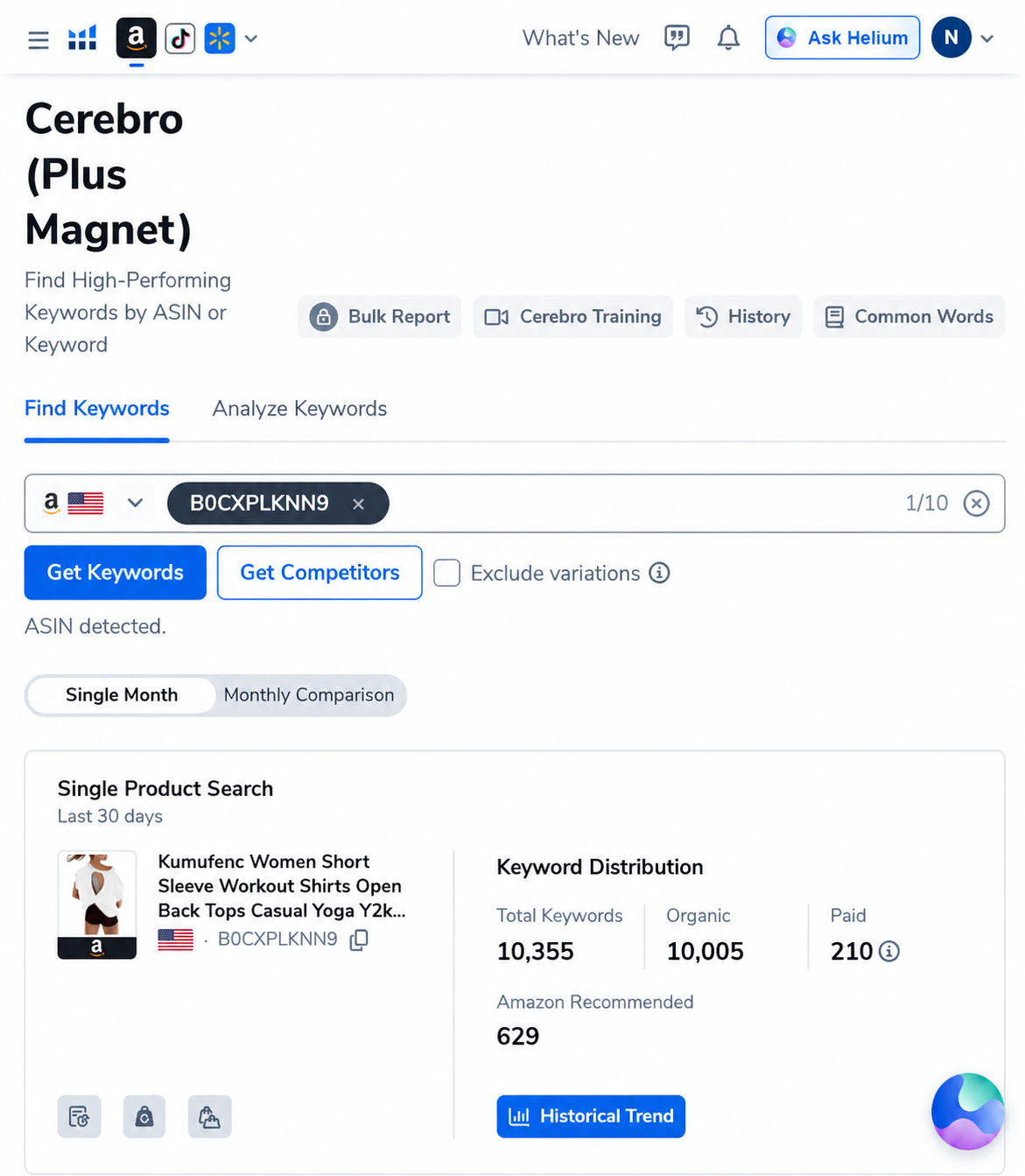
The first job was not to sort by IQ Score. It was to remove phrases that could misdescribe the garment. A high-scoring phrase for leggings, bras, men’s apparel or an unrelated material would still be unusable.
A five-gate workflow for using Cerebro IQ Score
Gate 1: product relevance
Write down non-negotiable product facts: product type, audience, material, fit, main feature and use case. Reject any phrase that conflicts with them. Relevance is binary before it becomes numerical.
Gate 2: sufficient demand
Choose a search-volume floor that matches the category and research purpose. In our case, combining a three-word minimum with a 500-search-volume floor reduced 10,355 terms to 3,563—a 65.6% reduction. That was still too broad for final action.
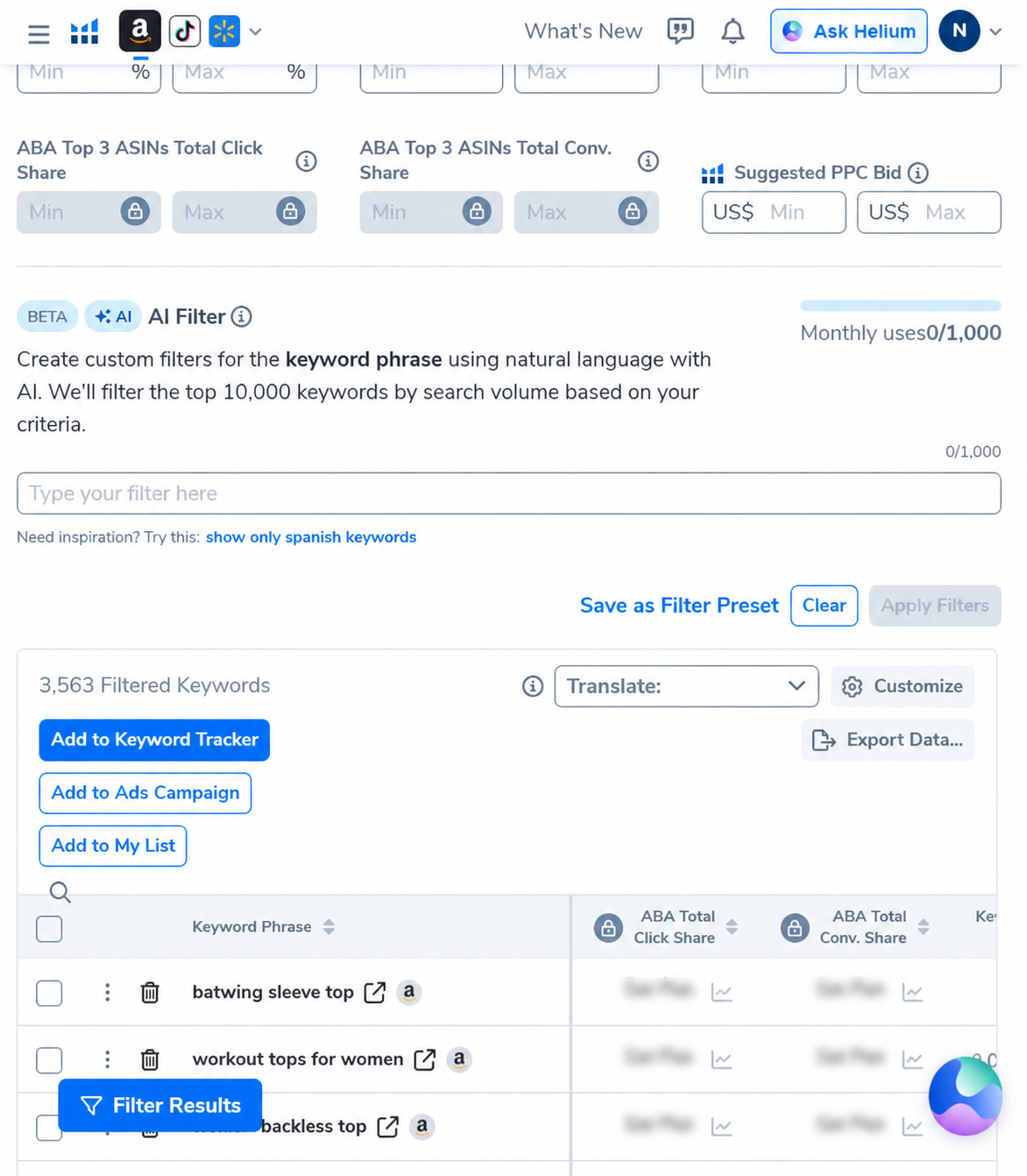
Gate 3: IQ Score as a sorting aid
After relevance and a practical demand floor, sort by Cerebro IQ Score to find ratios worth inspecting. Do not automatically select the first rows. Compare each phrase with competing-product count, organic ranks, sponsored activity and the products Amazon actually displays.
Gate 4: competitor evidence
For a multi-ASIN search, look for phrases where several genuinely comparable products rank—not just one loosely related outlier. Helium 10’s official Cerebro tutorial distinguishes organic rank from sponsored rank, which matters because paid visibility is not the same as durable organic relevance.
Gate 5: assign one job
Every retained keyword should have a destination: title, bullet, description, backend field, exact-match PPC test, phrase-match discovery or negative keyword. If a phrase has no clear job, keeping it only makes the export look more complete.
How to read the supporting columns
| Column | Useful interpretation | Do not assume |
|---|---|---|
| Search volume | Estimated relative demand at a dated snapshot. | Guaranteed traffic or sales. |
| Competing products | Broad result-set competition for the phrase. | Equal strength across every listing. |
| Cerebro IQ Score | Demand-to-competition ratio for prioritization. | Ranking probability. |
| Organic rank | Where the researched ASIN appeared organically when observed. | Permanent position or conversion quality. |
| Sponsored rank | Observed paid placement associated with the ASIN and keyword. | Profitable advertising. |
| Amazon recommended | A platform-provided relevance or advertising signal surfaced by Cerebro. | An instruction to add the phrase to prominent copy. |
Use word frequency before reading thousands of rows
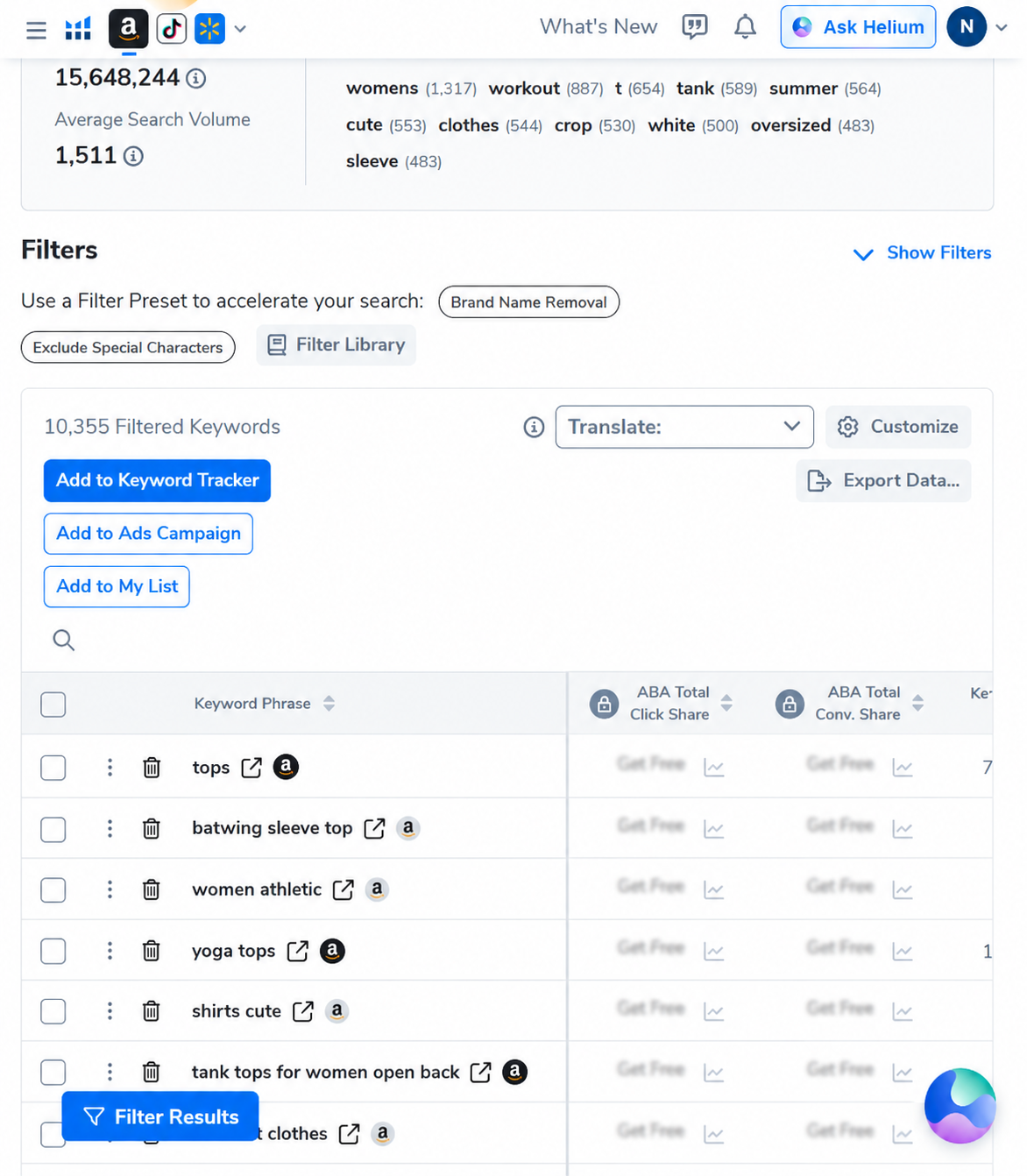
Word frequency helps reveal recurring product language across the result set. In our case, it made style and use modifiers easier to see before reviewing individual phrases. Treat frequency as vocabulary discovery: common words can still be too broad, trademarked, inaccurate or poorly aligned with buyer intent.
A practical decision table
| IQ Score | Relevance | Competitor evidence | Decision |
|---|---|---|---|
| High | Low | Mixed products | Reject; the ratio cannot repair intent mismatch. |
| High | High | Several comparable ASINs rank | Prioritize for deeper review and controlled testing. |
| Low | High | Core category phrase | Keep as a strategic term; difficulty may justify a longer horizon. |
| Medium | High | Weak paid activity but good organic fit | Consider listing placement before aggressive PPC. |
Common Cerebro IQ Score mistakes
- Sorting before cleaning: irrelevant phrases rise to the top.
- Using one competitor: one ASIN can introduce variation-specific or brand-specific noise.
- Ignoring the live results page: numeric fields cannot fully describe search intent.
- Treating estimates as audited facts: record marketplace and date, then validate after launch.
- Stuffing high-score phrases into copy: unnatural or inaccurate wording can reduce trust and conversion.
- Skipping economics: ranking for an attractive phrase does not guarantee contribution margin.
When should you stop researching?
Stop expanding when new searches mostly repeat known roots, every priority cluster has an assigned job, and the remaining uncertainty requires a real listing or advertising test rather than another export. Save the research date and assumptions so future ranking and conversion data can challenge the original thesis.
AI PILOT DAILY EXCLUSIVE
Run the workflow in Helium 10
AIPILOTDAILY20 20% off the first 6 months of eligible monthly billing.
AIPILOTDAILY10 10% off eligible monthly billing on an ongoing basis.
View Helium 10 plans and apply a code →
Affiliate disclosure: we may earn a commission if you purchase through this link, at no extra cost to you. Offers, plan eligibility and final pricing can change; verify them at checkout.
Frequently asked questions
What is a good Cerebro IQ Score?
There is no universal cutoff. Compare scores only after filtering for literal product relevance, a practical demand floor and genuinely comparable competitors.
Does a high Cerebro IQ Score mean a keyword is easy to rank for?
No. The score is a demand-to-competing-products ratio. It does not measure listing quality, review strength, brand dominance, conversion history or advertising pressure completely.
Should I choose IQ Score over search volume?
Use both for different questions. Search volume estimates demand; IQ Score adds a broad competition denominator. Neither replaces relevance and live result-page analysis.
Can Cerebro IQ Score predict sales?
No. Sales depend on visibility, click-through rate, conversion, price, reviews, availability, advertising and product economics.
Next step: Apply Cerebro filters in the right order using our paid-account case study.
Keyword clustering: Use Cerebro Word Frequency to organize recurring product language.
Sources and methodology
The screenshots and counts in this article come from a paid Helium 10 account run in September 2026. Metric definitions and workflow behavior were cross-checked against Helium 10’s official Cerebro tutorial, IQ Score and Exact ASIN Match explanation, and keyword research product page. Results vary by marketplace, ASIN, date and account.