AI PILOT DAILY · PRACTICAL GUIDE · NOVEMBER 12, 2026
For a family interview, prioritize comfortable conversation, understandable audio and a verified backup. An automated transcript can help organize the story, but it should not replace the original voice.

Begin with one story
“Tell me about your life” is a difficult opening. A narrower prompt gives the conversation somewhere to start: the first workplace, a move to a new town or a family tradition. Let the speaker choose what they are comfortable discussing.
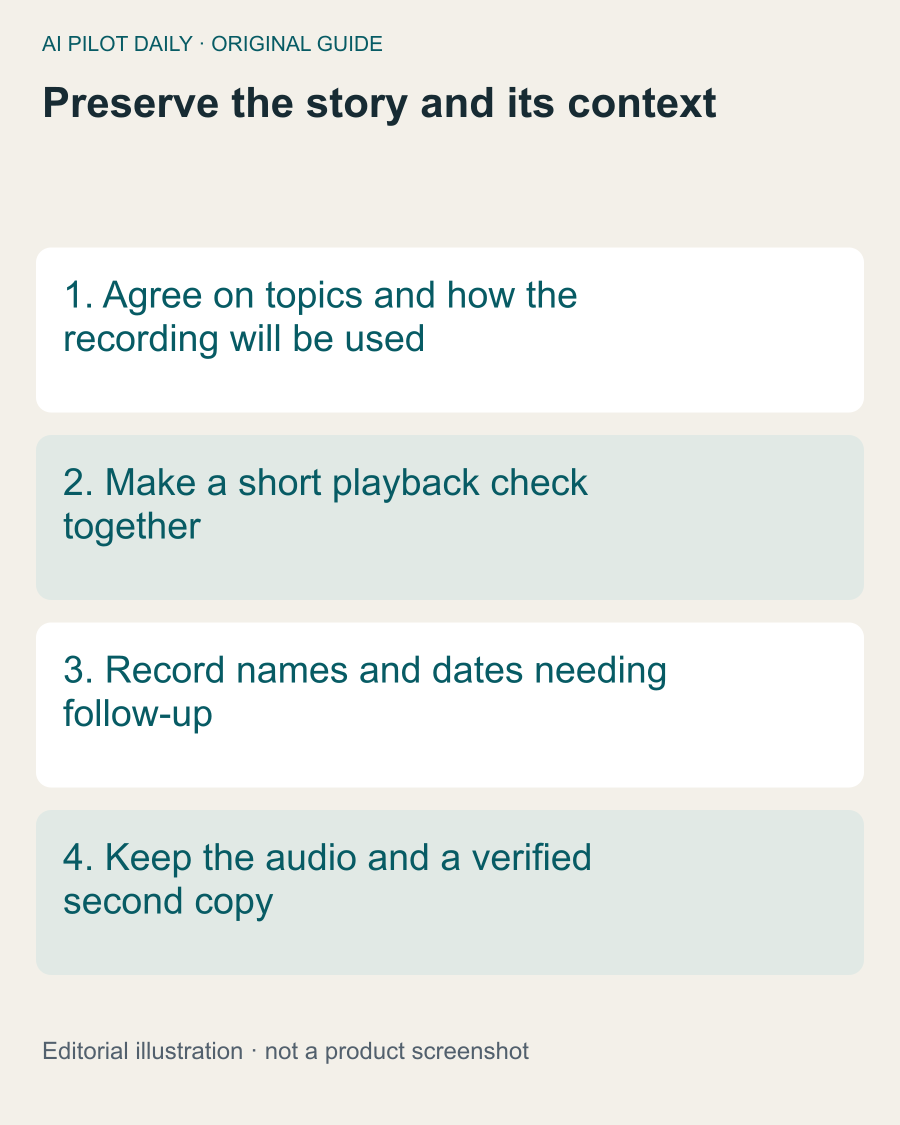
Explain whether the recording is for private family use, a shared archive or something public. Agree on who may receive it. If the person wants to pause or skip a topic, make that easy. The recording is not more important than the relationship.
Check the audio before the story gets going
Record a short exchange in the actual seating positions and play it back. Check both voices, not only the person holding the recorder. Reduce avoidable interruptions and place the device where it will not be covered by papers or handled constantly.
A special device is optional. Start with equipment you can operate reliably. If a phone already produces understandable audio and you know how to save the file, learn that workflow before buying something more complicated.
Keep the conversation natural
Use short follow-up questions and leave room for pauses. If a name or place is unfamiliar, note the time and ask for spelling at a suitable moment. Constantly interrupting for perfect metadata can break the flow.
At the end, ask which details need checking and whether any part should not be shared. Record those preferences alongside the file so they are not lost when someone else organizes the archive.
Name the recording while the context is fresh
Use a consistent pattern such as date, interview subject and topic. Avoid including unnecessary sensitive information in filenames. Add a brief note describing the people present, the main subjects and any restrictions on sharing.
A transcript is useful for locating stories, but check names and dates against the audio and other available records. If a date is uncertain, label it uncertain rather than allowing a neat transcript to make it appear settled.
Verify the second copy
Save a backup to an appropriate separate destination and open it there. Confirm that the duration and beginning and ending are correct. Do not delete the original simply because an upload progress bar finished.
Keep the audio, transcript and context note connected by a shared identifier. Future readers should know which recording a text passage came from and whether the wording was checked.
The most valuable result may be a small, well-organized collection rather than hours of unlabelled files. Preserve enough context that a family member can understand the story without needing you to explain where everything belongs.
A common question
Do I need an AI recorder for family interviews?
No. Use equipment you can operate reliably and verify the saved audio and backup.