AI PILOT DAILY · PRACTICAL GUIDE · NOVEMBER 12, 2026
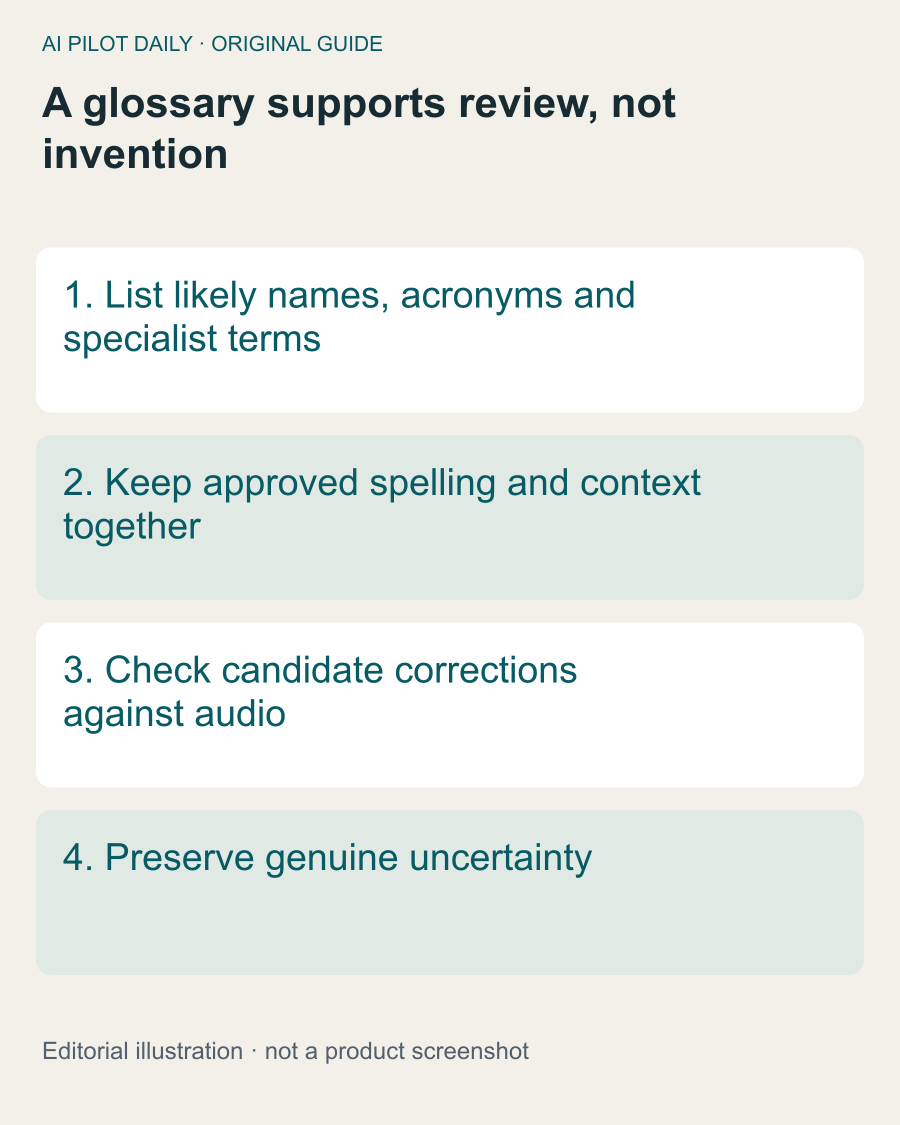
Prepare a short glossary of likely names and technical terms, then use it to review the transcript. A glossary helps identify possible errors; it is not permission to replace unclear speech with expected words.

Keep the list small enough to use
A focused list of product names, project codes and unfamiliar terms is more useful than a huge dictionary pasted into every task. Ask the interview organizer which entities are likely to appear. Include the full form of acronyms where it is known.
Do not put confidential names into an unapproved service merely to improve transcription. Prepare the glossary within the same access and data-handling boundaries as the recording itself.
Add context, not just spelling
A useful entry includes the preferred spelling and a short description. Two products may have similar names; an acronym may mean different things in different departments. Context helps you notice when an apparently correct word is still the wrong entity.
For a fictional example, “Atlas — internal scheduling project, not the customer analytics tool” is more useful than “Atlas” alone. Mark uncertain expansions as uncertain rather than converting them into facts.
Review suspicious passages
Search the transcript for plausible substitutions, inconsistent capitalization and several spellings of the same name. Return to the audio before making a correction. If the recording supports the glossary term, fix the text and preserve a checked version.
If it does not, resist the temptation to make the sentence match your expectations. The speaker may have used a different term or introduced a new entity. Ask for clarification when the distinction affects the outcome.
Numbers need a separate pass
A vocabulary list does not solve errors in quantities, units or dates. Review those independently, especially when they are attached to technical claims. Keep the unit with the number; a value without its unit may be unusable even when transcribed correctly.
For published quotations, verify the entire phrase against the recording. Correct spelling in working notes and editorial treatment of a direct quotation are different decisions; follow your organization’s conventions.
Turn corrections into reusable knowledge
After the interview, add confirmed terms that were missing and remove entries that were misleading. Keep the glossary scoped to the project or subject. A small, maintained reference will remain useful longer than a large file nobody reviews.
If the transcription service offers a vocabulary feature, check its current documentation for the supported format and limits. Do not assume it accepts a glossary or guarantees that every term will be used correctly.
The goal is a transcript with fewer avoidable naming errors and a clear review trail—not text that has been rewritten into what you expected the expert to say.
A common question
Can a glossary guarantee correct terminology?
No. It supports review; verify corrections against the audio and preserve unresolved terms.