AI PILOT DAILY · PRACTICAL GUIDE · NOVEMBER 12, 2026
For uncompressed PCM-style audio, estimate bytes as sample rate × bytes per sample × channels × seconds. This is an estimate of audio payload, not a promise about usable device capacity or compressed recordings.
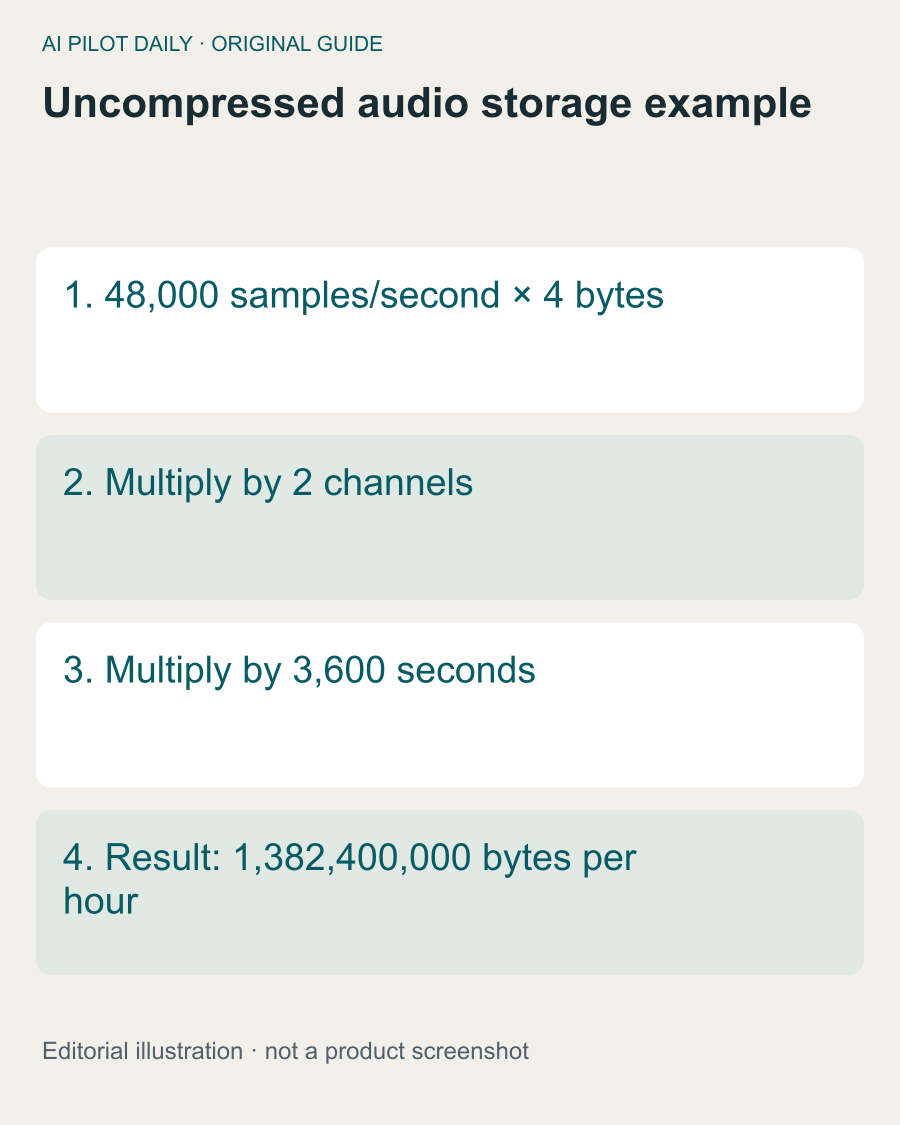
A worked example
Take an illustrative stereo file with a 48,000-sample-per-second rate and 32 bits, or four bytes, per sample. Multiply 48,000 × 4 × 2 × 3,600. The result is 1,382,400,000 bytes for one hour of audio payload: approximately 1.3824 decimal gigabytes.
This calculation assumes uncompressed sample data. File headers and metadata add overhead. Compressed formats use different storage behavior, so do not apply the result to an AI recorder simply because it also records speech.
Change one input at a time
In this example, a mono file halves the payload because it contains one channel rather than two. Doubling the duration doubles the payload. Changing sample rate or bytes per sample changes the result proportionally under the same assumptions.
These relationships are useful for planning, but they do not tell you which setting sounds best or is appropriate for your task. Check the recorder and editing workflow before changing recording settings just to reduce space.
Why the card label is not your usable budget
Storage marketed in decimal units and space reported by software may use different conventions. The device also needs room for its filesystem and other files. Leave practical headroom rather than dividing the printed card capacity by the example and planning to use every last minute.
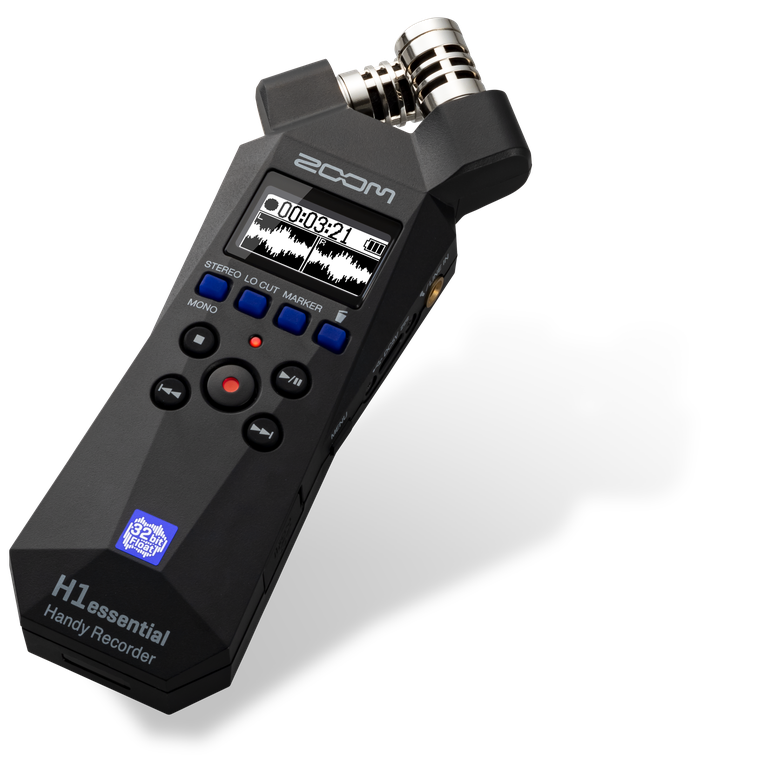
A recording device may impose additional file, duration or media requirements. Use the current manual for the exact model. The H1essential manual, for example, has sections on recording formats, cards and file management; this calculator does not replace those requirements.
Use an actual sample when possible
Record a representative test with your intended settings, inspect its size and calculate size per minute. Compare that with the formula. If they differ substantially, confirm whether the file is compressed, whether the duration is correct and whether you counted channels and bytes properly.
Do not use a sample from another app as proof of what your recorder will produce. A phone’s compressed voice memo and a standalone recorder’s uncompressed file can have very different sizes.
Plan for the entire project
Estimate the source recordings, then add space for backups and edited copies separately. Ten hours of source audio may produce more than ten hours’ worth of files once working versions and exports are included.
Storage planning is successful when there is enough room for the workflow and recovery copies—not when you achieve the highest possible advertised recording-hour number.
A common question
Does the WAV formula apply to compressed audio?
Not directly. Use the actual encoding and representative file sizes for compressed recordings.