AI PILOT DAILY · PRACTICAL GUIDE · NOVEMBER 12, 2026
A useful action item needs an action, an owner and a timing decision. If the conversation does not establish one of those, mark it for confirmation rather than letting a polished summary fill in the gap.

Start with decisions, not every sentence
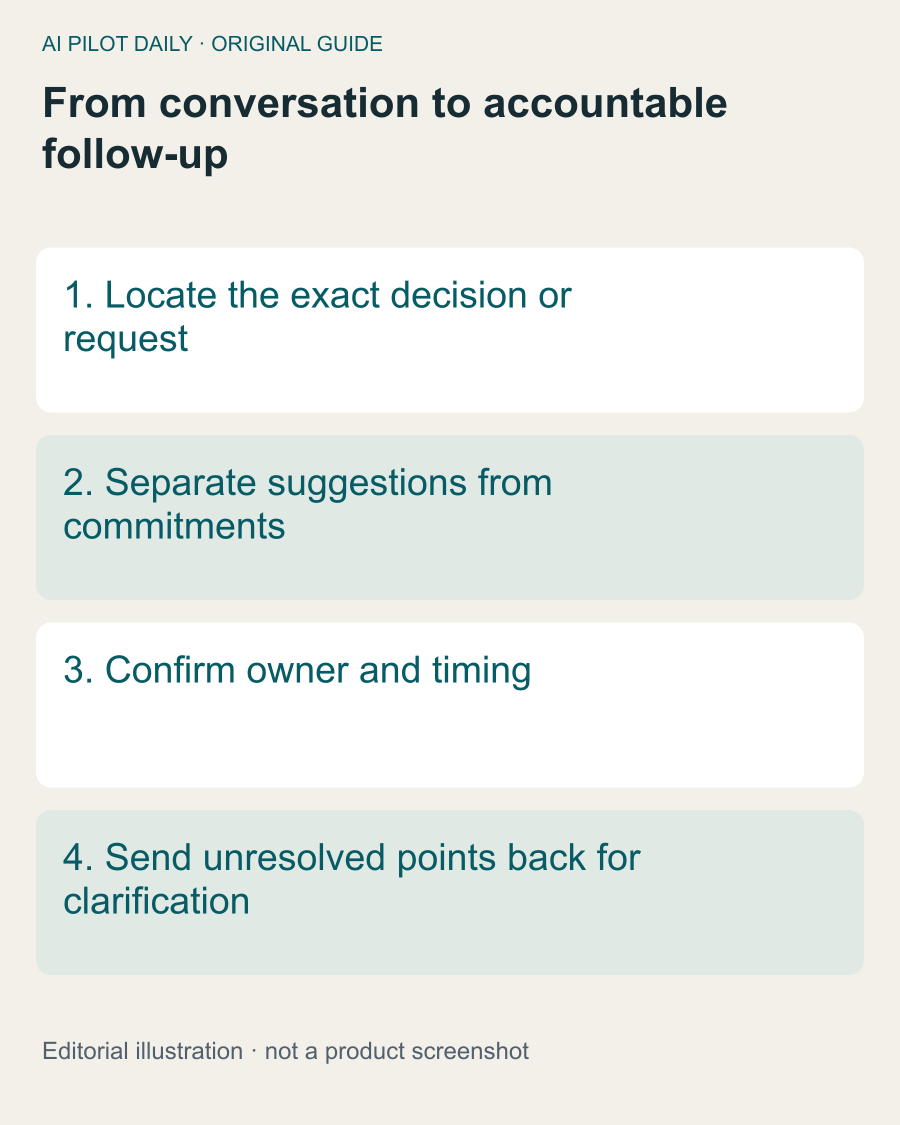
A transcript contains far more than work that needs doing. People speculate, repeat themselves and describe tasks that are already complete. Copying all of that into a task manager creates noise. First identify the passages where the group actually agreed to something.
Consider this fictional exchange: “We could send the proposal Friday.” “Let me check the numbers first.” It does not establish that someone committed to sending the proposal on Friday. The correct follow-up is to confirm readiness and responsibility, not create a firm delivery promise.
Use four fields
For each candidate task, record the action, owner, timing and evidence. Evidence can be a timestamp or a short reference to the relevant passage. Keep this in your working notes so a teammate can resolve disagreements without rereading the entire transcript.
Write “owner to confirm” when responsibility is unclear. Write “date to confirm” when timing was discussed but not agreed. Those labels are useful information. Replacing them with a plausible name or deadline makes the list look finished while reducing its reliability.
Keep a separate decisions list
“We are using the existing design” is a decision; “Maya will send the approved files” is an action. A decision may not need a task, but it can explain why another action exists. Store the two together without mixing their meanings.
Similarly, preserve questions that were deliberately left open. A good meeting summary can contain unresolved questions. It does not need to force a conclusion for every topic.
Review the expensive mistakes first
Check names, amounts, dates and words that reverse meaning. “Do not ship” and “ship” differ by a very small amount of text and a very large operational consequence. Return to the audio where the transcript is uncertain; do not fix it by guessing what would make sense.
If the original is still ambiguous, ask the participants. An uncertainty that survives review should remain visible until someone resolves it.
A follow-up that is easy to approve
“Here are the decisions and proposed action items. Please confirm the two items marked owner/date to confirm; those details were not clear in the recording.”
Send a concise list, not an unedited transcript. Keep distribution limited to the people who should see the material. If the team approves changes afterward, record the new agreement as a later update instead of presenting it as something said in the meeting.
This workflow is useful with any transcript source. The value comes from preserving the difference between what was said, what was agreed and what still needs a decision.
A common question
Can I fill in an obvious task owner?
Not as a confirmed commitment. Mark the owner for confirmation unless the conversation establishes it.