AI PILOT DAILY · PRACTICAL GUIDE · NOVEMBER 12, 2026
Use an AI transcript to find a passage, not as the final authority for a quotation. Verify the wording and surrounding context against the original recording before sharing or publishing it.

A fluent sentence can still be wrong
Transcription errors are not always obvious gibberish. A sentence may read naturally while substituting a name, dropping a negative or joining separate thoughts. That is why proofreading text alone is not enough when exact wording matters.
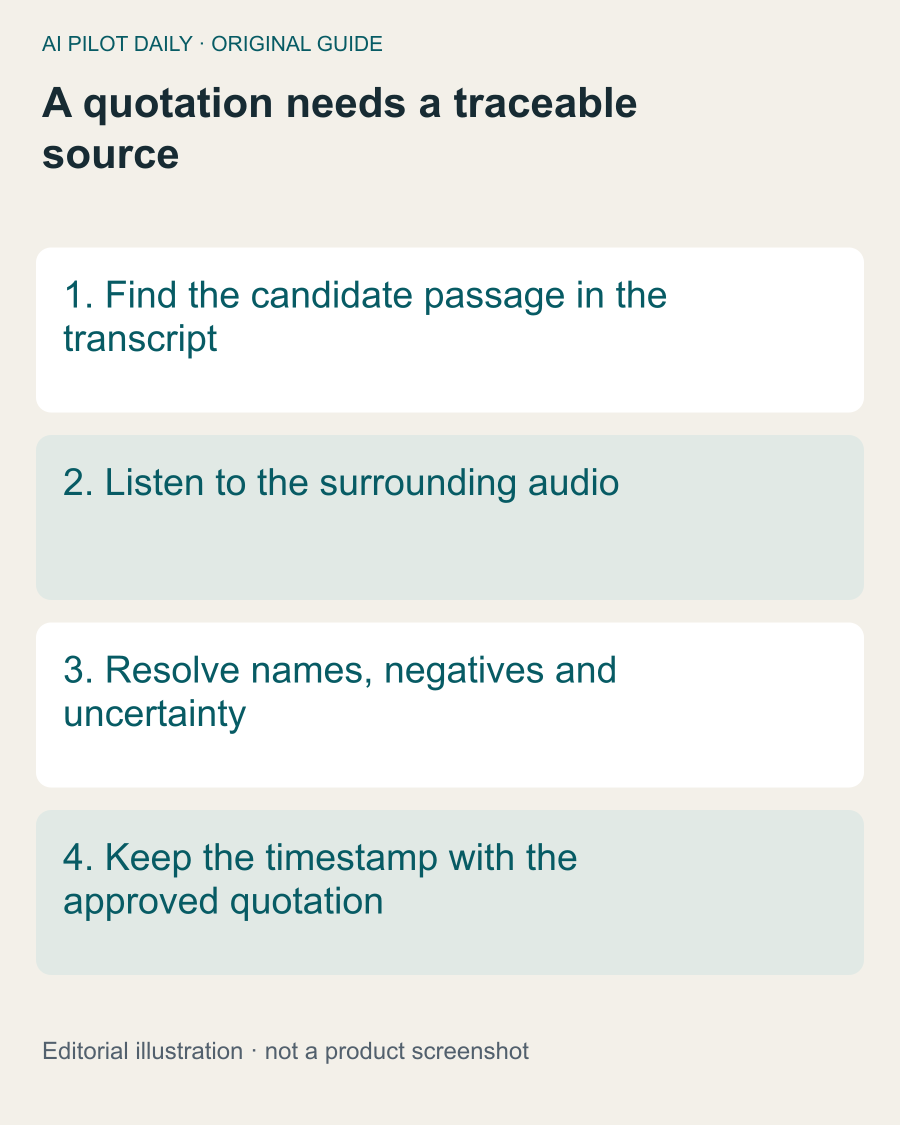
Begin with the passage you want to use. Locate the corresponding audio and listen to the sentences before and after it. Confirm both the words and whether the speaker was describing a hypothetical example, repeating someone else’s view or making their own claim.
Build a small evidence record
Keep the recording identifier, start time, end time, speaker and verified text together. Add a short note if there is an unresolved word or a contextual qualification. A filename alone is less useful when the recording contains an hour of conversation.
For example, a fictional working entry might read: “Interview A, 12:40–13:05, product lead, wording checked; statement concerns the pilot only.” That final qualification prevents a limited observation from becoming a claim about the whole business.
Do not repair meaning silently
If a word is unclear, do not replace it with the term you expected to hear. Re-listen, check nearby context and, when appropriate, ask the speaker. If the uncertainty remains, choose a different passage or preserve the uncertainty in your notes.
Separate verbatim quotation from paraphrase. A paraphrase can be clearer, but it should not appear inside quotation marks as though the speaker used those exact words. Follow the editorial conventions relevant to your publication or organization.
Keep revisions distinguishable
Retain the machine transcript separately from your checked version. Give revisions meaningful names rather than overwriting the only copy repeatedly. When someone asks why a quote changed, you should be able to explain the correction.
This does not require a complex database. A consistent recording ID and a simple verification sheet can be enough for a small project. The important part is that the checked text stays connected to the source.
A sensible order for review
Verify the passages you intend to use first, then review other material according to the project’s needs. Pay special attention to numbers, product names, dates, comparisons and statements that could be misunderstood without their conditions.
Do not publish a transcript or recording merely because it is easy to export. Confirm that your use and distribution are appropriate for the agreement under which the interview was recorded.
The goal is not to distrust every automated sentence. It is to make important quotations defensible without asking readers to trust an invisible transcription step.
A common question
Is a readable transcript safe to quote?
Readability does not establish accuracy. Check the wording and context against the recording.